
Charles Farotimi
Senior Writer
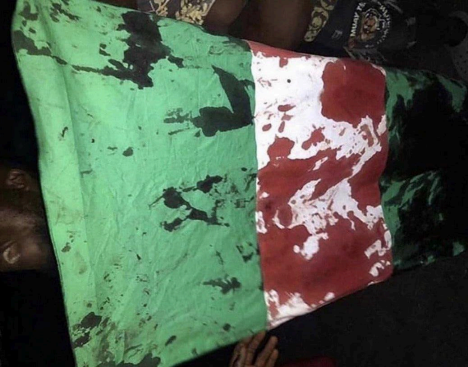
Nigeria is not a real place. I propose that it symbolizes the head of the colonial slave ship. A giant piece of capital meant to extract resources for the express purpose of fueling eurocentric expansion. So for those of us who cling so deeply to our nationality, our “culture” and our “obligations”, this is for you.
In analysing the Nigerian condition we must apply Racial historicity. Karl Jaspers proposed historicity as a neutral universal concept that suggests that an individual makes an active choice in accepting their position in history and perceives their lives as part of an ongoing process determined by their situated reality. This means you accept the fact that your existence is limited and situated at a fixed point in collective history and your life is shaped by the material constructs, social norms and other factors available to you. However I propose that Jasper’s point is severely reductive.
Jasper’s position as a white man enables him to write from a position of neutrality/universalism. Ironically this contradicts the very premise of historicity as race is neither natural nor biological. This reveals a major issue in western/eurocentric writing as it assumes the reader is situated in access and individualism which contradicts our position as black people. Therefore Jasper’s
work is brought up to lay a very important premise for this article.
The concept of blackness is founded on subordination. Everything we see of us today, in our culture, our worth and even when we look in the mirror and see ourselves is shaped and influenced under the image of whiteness. When we interact with others as Nigerians we are not occupying a neutral identity that truly reflects our experiences but rather an inherited one shaped by factors outside our understanding. I mourn the black child because when they are born they do not understand the collective misery that will be imparted unto them in order for the slave ship to continue sailing.
So what does this have to do with Jasper’s work? I propose that we understand that our historicity, our place in reality, in life lacks any form of consent. When we look at our country Nigeria, we blame our politicians, our people, our lack of unity and perhaps even our family dysfunction. But why blame yourself for something you have no control over. All these aspects that we collectively lament over are symptoms of the country operating as is meant to. The African continent in this case Nigeria is supposed to operate in a constant state of arrested development. In other words Nigeria is a child that’s never meant to grow conjoined to the hip of its abusive parents.
Are our leaders truly corrupt? Connecting to our opening statement, if Nigeria represents the head of a colonial slave ship aimed towards resource extraction, then what is the actual objective of the ones left to steer the boat? This is where the complexity sits. We often think of the slave trade as a one to one relationship, as black and white but its important for the sake of this article and my later work that we begin to dissect and dismember the mechanism that created the conditions that we are under. We must avert our eyes from the horrors, the abuse and the brutality for just one second and think. Prior to the slave trade that we know of before the slave raids, before the missionaries and before the Portuguese, what was the climate?
The people before us are long dead and gone. We are the corpses of a long dead and brutalised people. Like darkened coal that powers a steamboat we enable the global economy to continue and exist with our bodies, our souls and any leftovers that those departed have left us. In order for us to be who we are, to be Nigerians, to be Africans, centuries of British,
Portuguese, Spanish and French intervention has been required to create the black man. Why would the people who hate us, who curl at the slightest gaze at us in public want to create us?
Whiteness like historicity is not a neutral identity; it is situated in several conditions and the main ingredient in reproducing these conditions is blackness. People tend to forget there were specific meetings between Europeans and our ancestors which lead to the invention and institution of race. Prior to the late 17th century Europeans did not identify based on the colour of their skins but rather a multitude of other factors including Religion, region and ancestry. Like race all these elements are not “natural” or inherent but rather a result of matters more complex than my current understanding affords me.
However, notice these elements of religion, region and ancestry. The region Europe occupies particularly Britain, France and many of the “modern” global superpowers occupy is drought with conflict and tension,according to their well documented history which they have forced us to regurgitate in their institutions. Focusing on these elements shows that around this period of time, European social dynamics were in constant tension including peasant revolts, religious wars, mass poverty and divide. If such situations were a fixture within European society then how do we have the situation we find ourselves in today.
Think of us as an exported fixture, burnt charcoal that outlines the shape of whiteness. Perhaps our existence sets the distinction for how the rules are set. What is uncivilised, what is primitive, corrupt or ghetto. When we say these words,we speak with our mouths but like talking heads we are disconnected and divorced from the body. A white colonial ghost inhibits the head and releases the speech but the body lies disjointed. Does that mean we have no will, no hope or capacity, I don’t know. I feel as though those elements are immaterial to anything, a strawman.