


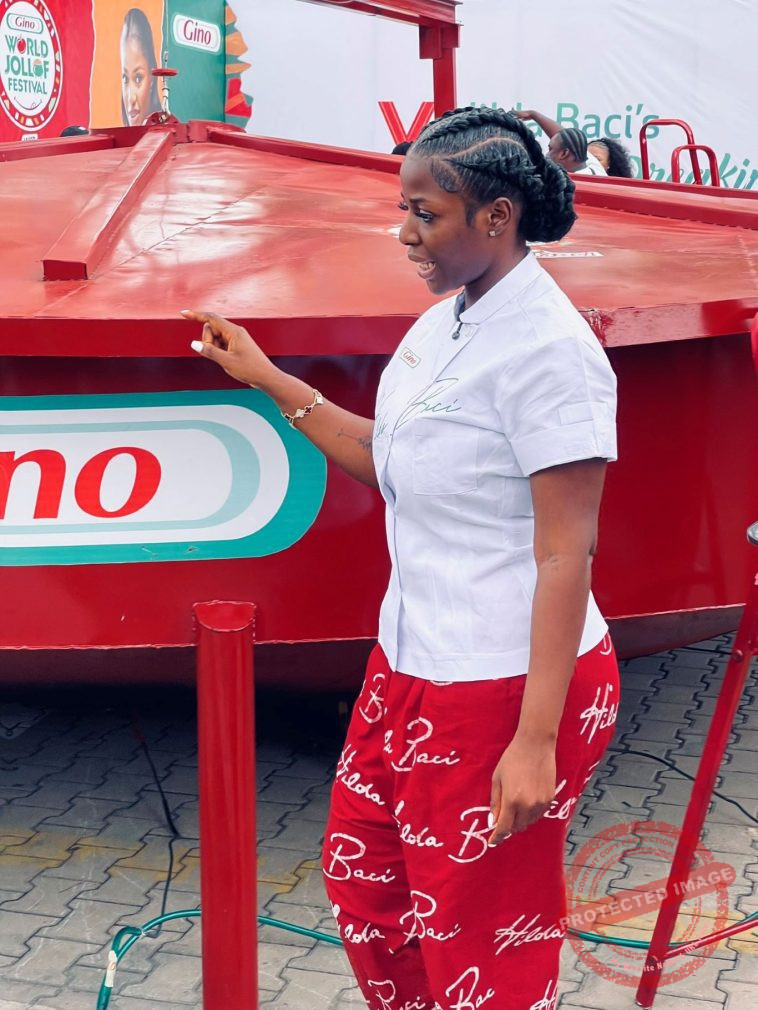
On a humid Saturday morning in Lagos, a pot the size of a small swimming pool began to smoke. The crowd pressed closer, phones raised, as chef Hilda Effiong Bassey, better known as Hilda Baci, leaned over the rim of the six-metre-wide steel cauldron and broke into a grin.
“Yes, I can officially confirm this pot is squeaky clean! I washed it myself,” she told the thousands of onlookers, her voice carrying through the loudspeakers. The cheer that followed was less about hygiene and more about history. Baci was about to attempt the impossible: cook the world’s largest pot of Nigerian jollof rice.

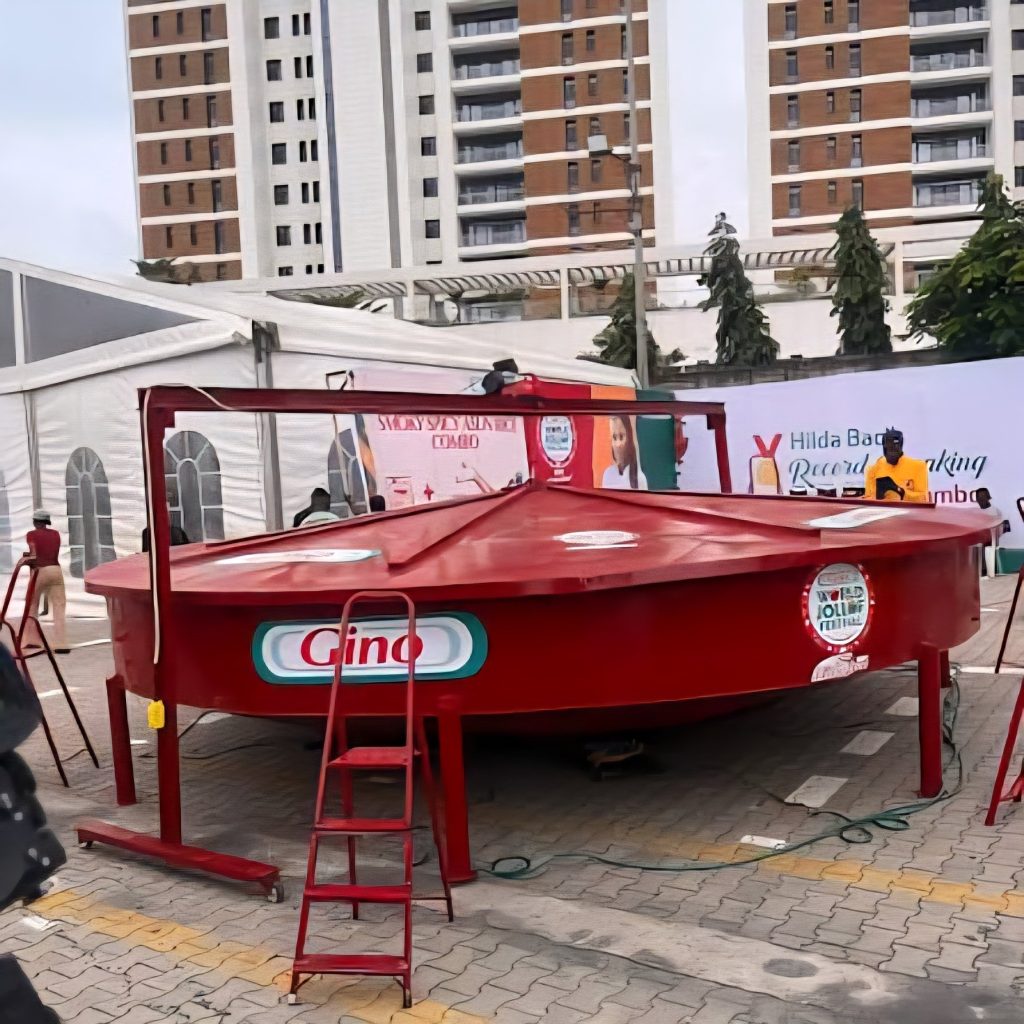
From Dream to Steel
For most people, the thought of cooking for thousands is overwhelming, but for Baci, it was the logical next step. Two years earlier, she had made Nigerians and the world proud by breaking the record for the longest cooking marathon. That feat proved her stamina. This new one proved her scale.
According to her, the planning took nearly a year. Engineers welded together the giant pot, and event managers rehearsed how hundreds of volunteers would stir the dish in shifts. Sponsors supplied the mountain of ingredients: 4,000 kilograms of rice, 600 kilograms of onions, 750 kilograms of oil, and truckloads of tomatoes and spices.
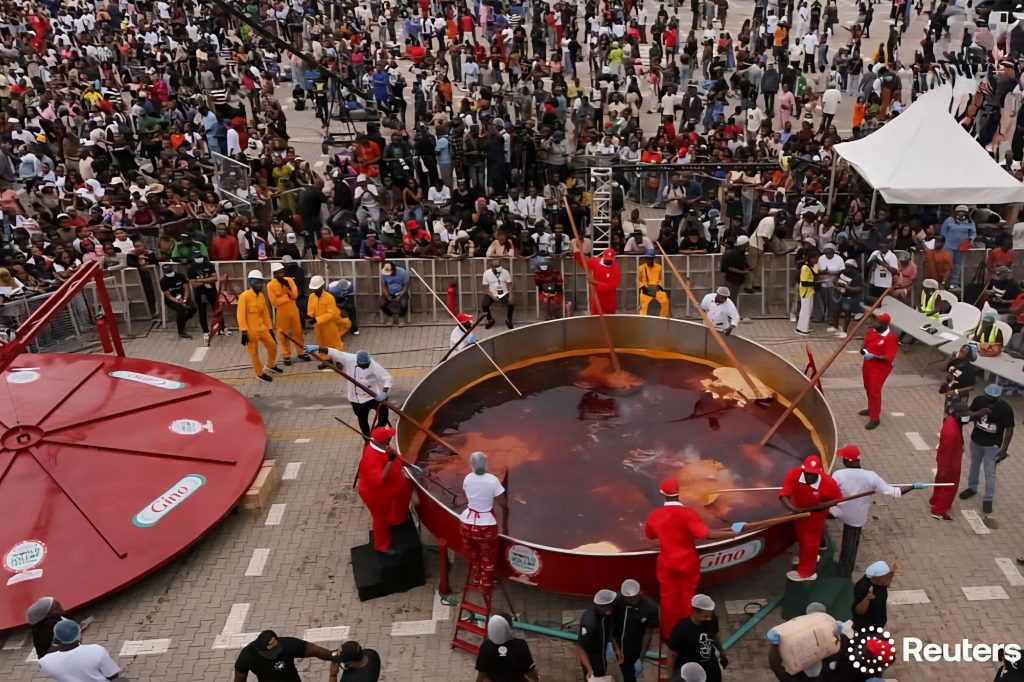
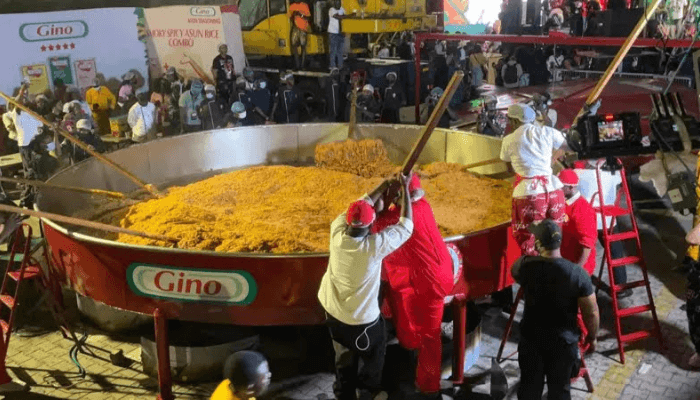
The Gino World Jollof Festival, held at Eko Hotel & Suites on Victoria Island, was less a cookout and more a carnival. Afrobeat artists performed live, and DJs kept the crowd hyped while volunteers marched toward the pot like a small army, paddles in hand.
When the fire was lit, the atmosphere shifted. For the next nine hours, the pot became the centre of gravity as steam rose and the smell of sizzling onions and pepper filled the air. Each new sack of rice drew applause, as though the audience were watching goals in a football match.
“It took nine hours of fire, passion, and teamwork,” Baci later said.
But no great story is without drama. As the final pot was lifted by a crane for weighing, a requirement for Guinness World Records, one of the pot’s anchors broke, and the entire pot was almost on the ground. Gasps rippled through the festival, and for a few minutes, months of intense planning seemed like it was on the verge of collapse.
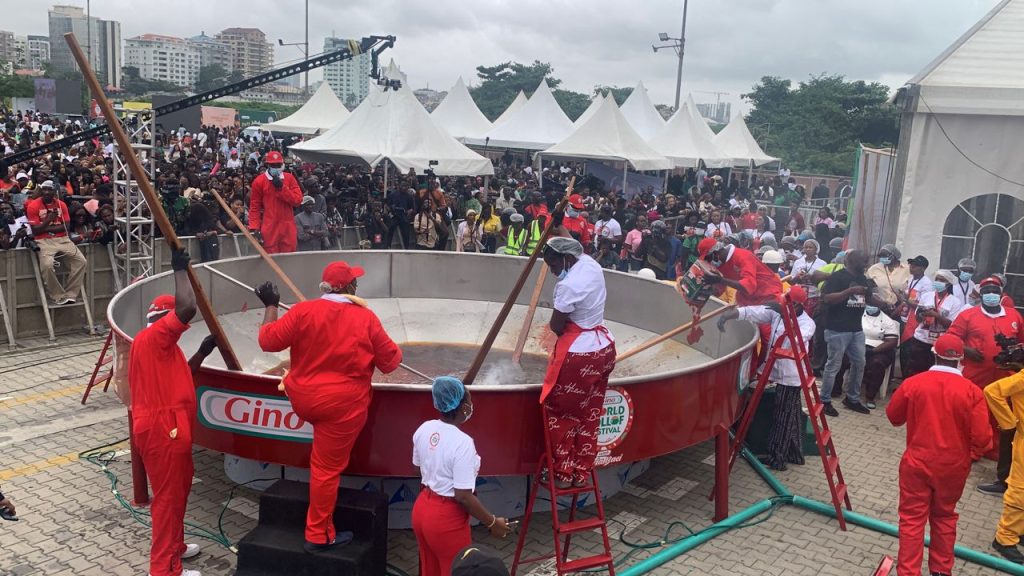
However, the pot held firm, the rice was safe, and engineers steadied the frame; the record-breaking jellof was weighed. Finally, a pot of 8,780 kilograms of jollof rice was confirmed. Baci cooked the largest pot enough to feed an estimated 16,000 people, and history was made.
Guinness Steps In
The Guinness World Record has a process for approving attempted records. Their process demands evidence: calibrated scales, independent witnesses, continuous video logs, and sanitation checks.
Baci’s team had it all. After reviewing the evidence, Guinness declared the record official: the largest serving of jollof rice ever cooked.
And with that, Nigeria’s jollof, which had long been at the centre of playful rivalry with Ghana and Senegal, now had global bragging rights.
“We have written history together,” Baci said after the GWR confirmed her record.
Beyond the spectacle of a giant pot
For one, it’s a statement of cultural pride. Jollof rice is more than food; it’s West Africa’s signature dish, a unifier and a battleground of taste. Baci’s record didn’t just celebrate Nigerian cuisine; it broadcast it to the world.
It’s also a story of entrepreneurship and grit. Turning an idea into a nine-month project involving engineers, sponsors, and thousands of guests is proof that ambition, when backed by planning, can move mountains, or cook them.
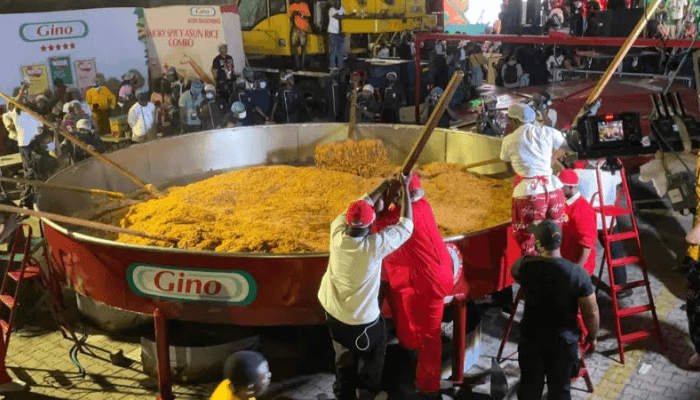
Yet the record also sparked reflection. What happens to all that food? Organisers stressed that portions were served to festivalgoers and distributed to communities. But the question of sustainability lingers around such mega-events.
For Chef Baci, the achievement is another milestone in a rapidly rising career. From her cooking marathon to this giant pot, she has mastered the art of turning culinary feats into cultural events.
For Nigerians, the image of that steaming, six-metre pot may live longer than the rice itself: a symbol of possibility, of what determination can do when fire meets teamwork. As one festivalgoer put it, shaking his head in awe:
“Only in Nigeria can jollof taste like history.”
Author: Kangmwa Gofwen
Lagos Bureau Chief, Nigeria
gofwenjoy@gmail.com










Hello there, simply turned into alert to your blog via Google, and found that it’s really informative. I am gonna be careful for brussels. I will appreciate if you happen to proceed this in future. Lots of people will be benefited from your writing. Cheers!