
How Nigeria’s First Military Coup Reached a Quiet Hotel Corridor in Ikoyi
In the early hours of 15 January 1966, Nigeria witnessed its first military coup—an upheaval that would irreversibly alter the country’s political and military landscape. Much has been written about the high-profile assassinations that occurred that night, but one of the most chilling killings unfolded far from official residences or government compounds. It happened quietly, in a dim corridor of the Ikoyi Hotel in Lagos, where Lt Colonel Abogo Largema, the Commanding Officer of the 4th Battalion in Ibadan, was executed in cold blood.
The assassination took place around 1:45 a.m. and was led by Major Emmanuel Ifeajuna, one of the central figures in the coup. The circumstances surrounding Largema’s death remain among the most disturbing details of the night’s operations.
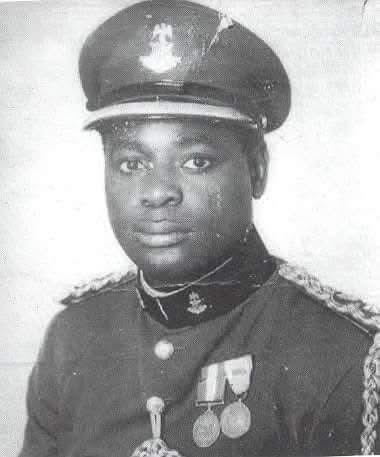
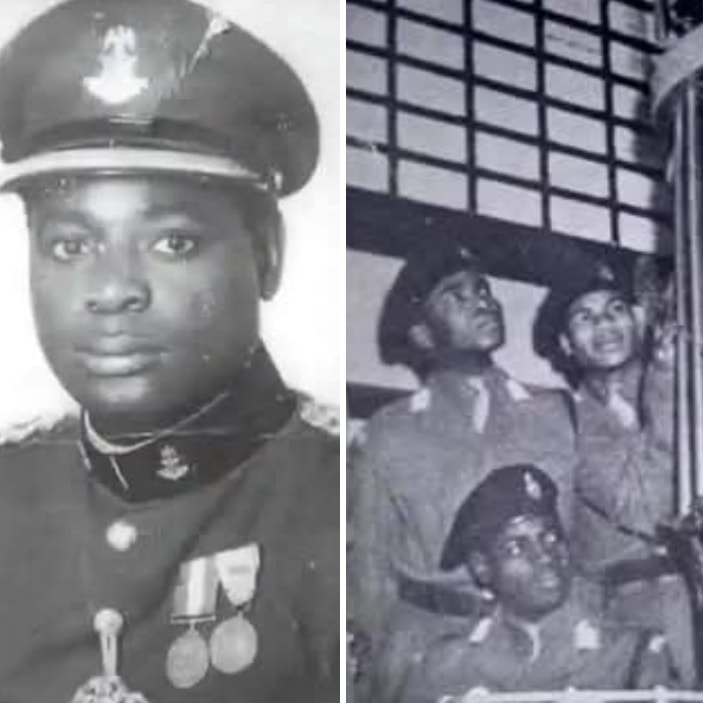
Who Was Lt Colonel Abogo Largema?
Lt Colonel Abogo Largema (Service No. N/9) was born on 10 November 1933 in Damboa, then part of Nigeria’s old Borno Province. His early education began in 1937 at Bama Elementary School, followed by Borno Middle School, and later Kaduna College (Barewa College) from 1945 to 1950—one of Northern Nigeria’s most respected educational institutions.
He entered the military at a time when Nigeria was transitioning from colonial to national structures. As a cadet, he distinguished himself through exceptional athletic ability, representing the Royal Military Academy Sandhurst in athletics and boxing. His performance marked him as one of the Army’s promising young officers.
By January 1966, Largema had risen to command the 4th Battalion in Ibadan, a post that conferred significant military influence.
The Night Before: A Party, a Hotel Room, and a Hit List
On the night of 14 January 1966, many senior officers in Lagos attended a well-known social event—the party hosted by Brigadier Zakariya Maimalari, Commander of the 2nd Brigade. Largema was among the guests.
After leaving the party, he checked into the Ikoyi Hotel. He was unaware that the coup conspirators had already marked him for elimination.Although he had left his command post and posed no immediate strategic threat at that moment, Major Ifeajuna still sought him out. The decision to kill Largema—despite his temporary absence from the battlefield—suggests that the motives were deeply personal and premeditated.
The Killing at 1:45 a.m.
According to eyewitness accounts and later documentation, including Max Siollun’s Oil, Politics and Violence: Nigeria’s Military Coup Culture (1966–1976), Major Ifeajuna forced the hotel receptionist at gunpoint to tell Largema that he had a telephone call.
When Largema stepped into the corridor dressed in his pyjamas, he walked straight into an ambush. Ifeajuna and Second Lieutenant Ezedigbo, who had been waiting out of sight, opened fire, killing him instantly.His body was placed in the boot of their vehicle as the coupists moved on to their next target.
Why Was Largema Targeted?
Historians generally point to three main reasons for Largema’s inclusion on the assassination list:
1. His Alleged Links to Premier S.L. Akintola
The coup plotters believed that Largema’s battalion in Ibadan had grown too closely aligned with Chief Samuel Ladoke Akintola, the Premier of the Western Region, who was among their principal targets. Some conspirators accused Largema of allowing his battalion to function as “Akintola’s private army”.
2. His Social Proximity to Political Elites
Largema was known to move within political circles—behaviour that coup participants viewed as fraternising with politicians, a grave breach of military culture.
3. His Reputation as a Strong, Capable Officer
As a respected commander, he was seen as someone who could potentially mobilise resistance or jeopardise the coup if left alive.
The Coup’s Next Moves
The coup plotters operated with a detailed list of political and military figures slated for elimination. Though Largema was not their highest-priority target, the lengths they went to track and assassinate him—following him to a hotel in the middle of the night—underscore their determination.The chain of killings continued across Lagos, Ibadan, and Kaduna, claiming the lives of several key leaders, including:
- Sir Ahmadu Bello
- Chief SL Akintola
- Brigadier Zakaria Maimalari
- Brigadier Samuel Ademulegun
- and others across the regions.
The story of their deaths forms the next chapter in the unfolding narrative of the January 1966 coup.
A Symbol of the Coup’s Ruthlessness
The murder of Lt Colonel Abogo Largema remains one of the starkest symbols of the January 1966 coup’s brutality. Carried out not on the battlefield but in the quiet corridor of a hotel, his killing reveals how personal, calculated, and symbolic the operations of that night truly were.
Beyond its violence, Largema’s story reflects the deep political tensions, mistrust, and fractures that defined Nigeria’s early post-independence years—a turbulence that would usher in decades of coups, counter-coups, and military dominance.
A-CHOICES